Talk
Tue, 13 Oct · 1:00 pm · Bengaluru
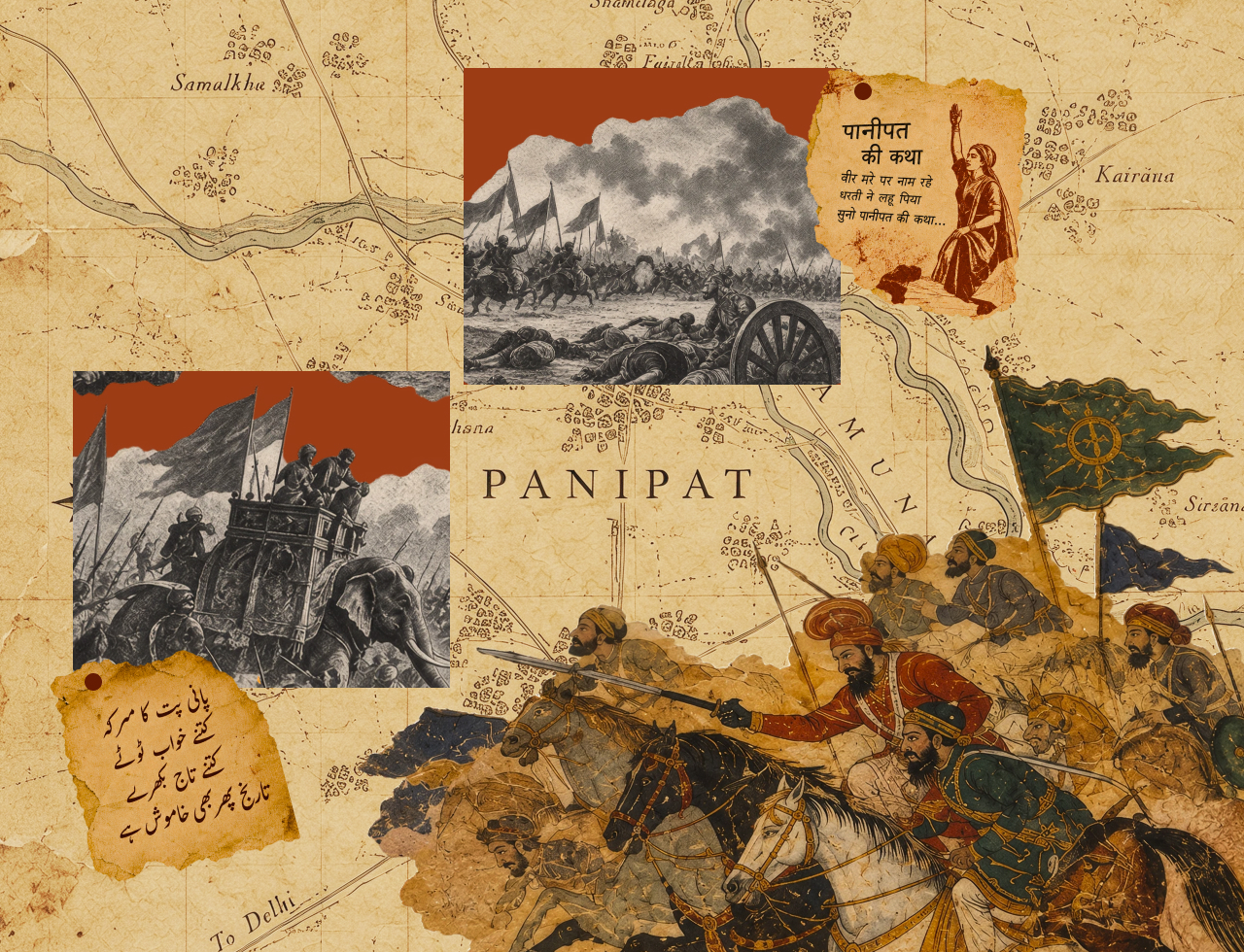
The Many Pasts of Panipat, 1761
About
A great “what if?” moment in Indian history, the Third Battle of Panipat in 1761 has produced martyrs, ballads, and endless partisan debate. This lecture examines how its retelling, across school textbooks, Hindu nationalist historiography, and cinema, has flattened a complex event into a tale of heroes and villains. It raises the question, whose Panipat are we really remembering?
The vernacular primary sources tell a different story: where popular memory insists on certainty, they equivocate, contradict, and complicate. A micro history of the battle reveals multiple pasts, remembered and recorded by multiple men. This lecture makes a case for why critical historians cannot ignore this plurality while narrating the event to a generation raised on a communal rendering of Indian history.
About Satish Chandra
Professor Satish Chandra (1922-2017) was one of India’s foremost historians and a towering authority on medieval Indian history. Over a distinguished four-decade career, he taught at leading universities across the country, including Allahabad University, Aligarh Muslim University, Delhi University, Rajasthan University, and finally Jawaharlal Nehru University (JNU). At JNU, he co-founded the Centre for Historical Studies alongside S. Gopal, Bipin Chandra, and Romila Thapar. As Chairman of the University Grants Commission, he went on to help shape academic life across India, and in 1985, deeply committed to intellectual exchange, he co-founded the Society for Indian Ocean Studies. A thoughtful historian who brought a Marxist approach to the field, Chandra’s work bridged eras and ideas, leaving an enduring mark on the study of India’s past.
Also on
More at Bangalore International Centre


Same day